

Key Takeaways:
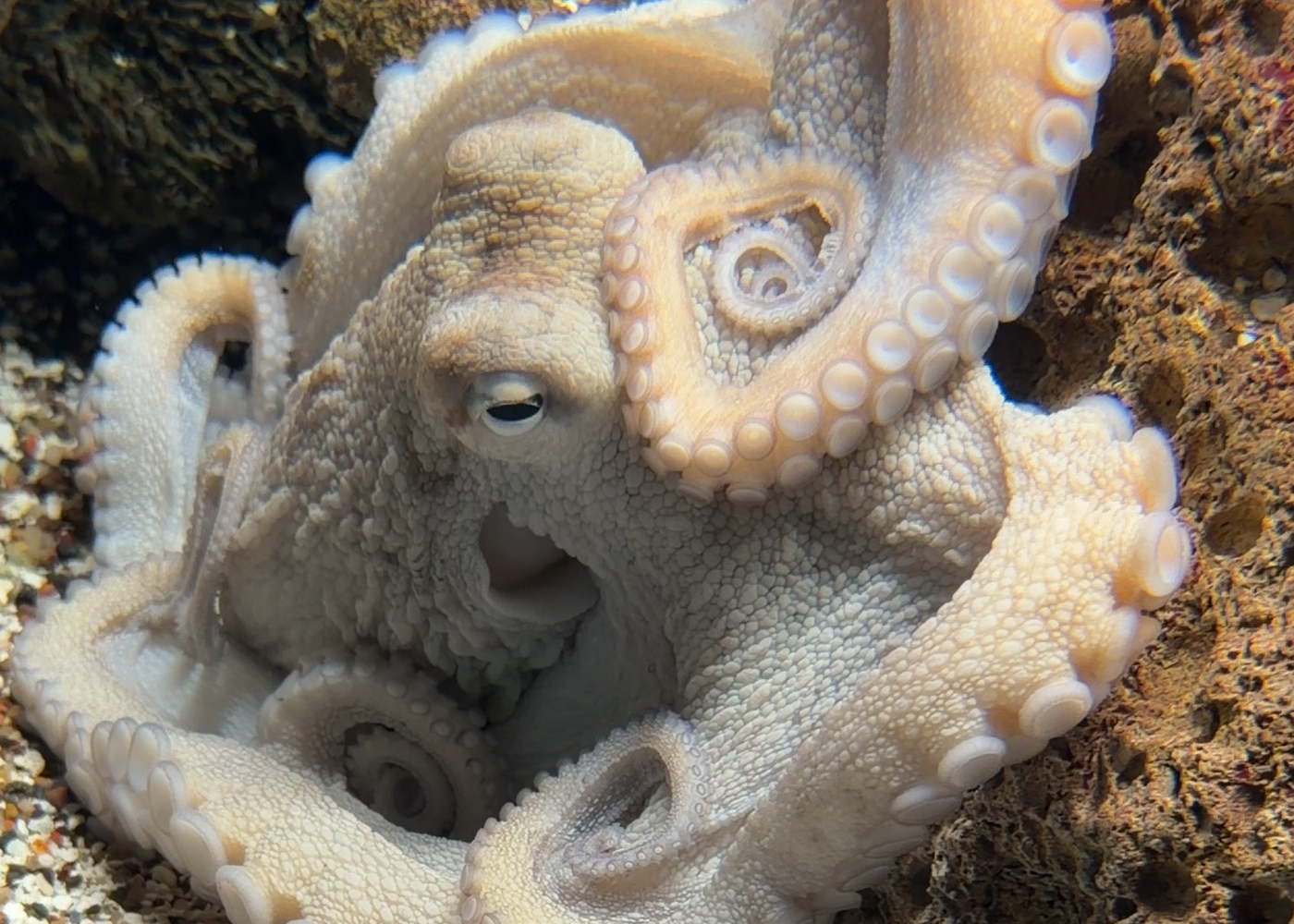
• An octopus is a cephalopod that displays incredible intelligence
• The common octopus has eight arms, three hearts and nine brains
• Though they have no bones, octopuses do have a beak that aids in eating prey
• An octopus has specialized pigment cells and muscular structures that aid in camouflaging
What Is an Octopus, oFISHally?
Octopuses may look like fish, but they belong to a class (almost) all their own. They’re cephalopods — relatives of squid, cuttlefish, and nautilus — named from Greek for “head-foot,” a nod to their large head (called a mantle) and many limbs.
Cephalopods are known to be intelligent creatures, but it appears the octopus may be at the top of this class. Researchers have discovered that octopuses have the ability to solve puzzles, navigate complex terrain, showcase memory skills and even exhibit playful behavior!
Crazed Anatomy
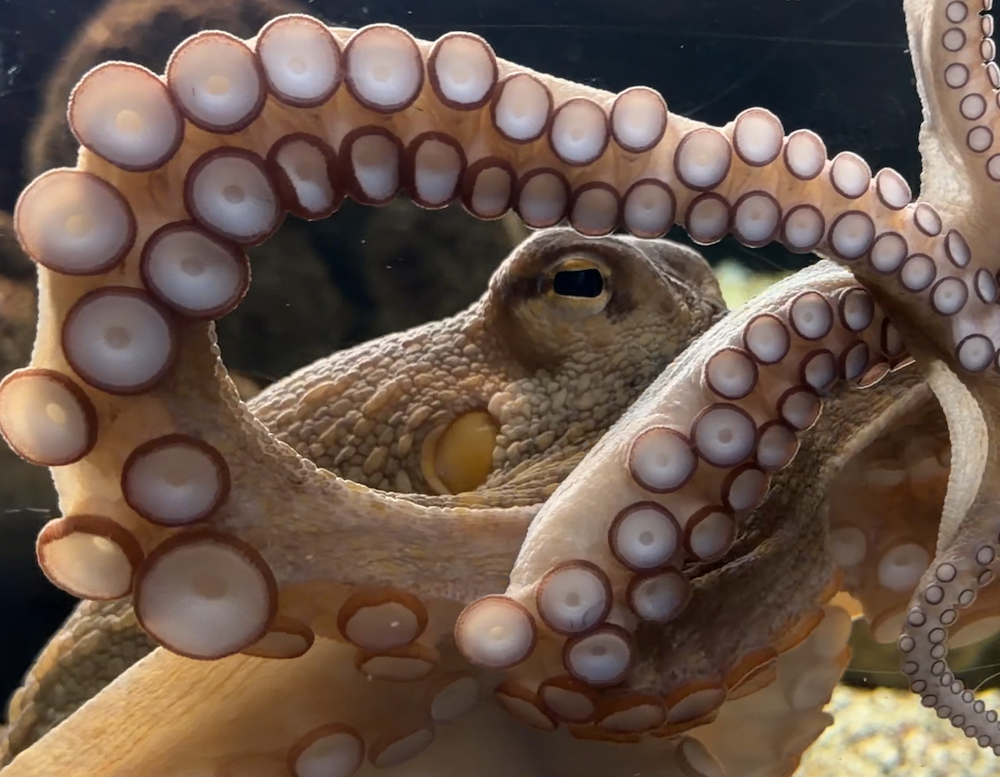
Pop quiz: How many tentacles does an octopus have? The answer is zero! The eight limbs of an octopus have suckers along their entire length and are referred to as arms (vs. tentacles which have suckers only at the tip). In fact, most of an octopus’s neurons — around 60% — are contained within their arms!
Speaking of neurons, the octopus has a mini “brain” within each limb, bringing their total brain count to nine! These intelligent creatures are known to be puzzle masters and escape artists, using each limb independently to pry open shells, manipulate and twist objects and even find their way out of tanks!
Pro Tip: Look into our Camouflage exhibit during your next visit. You may see a common octopus with some playful-looking enrichment! We provide enriching items that offer these smart cephalopods a challenge, choice or change in environment to maintain mental and physical wellbeing.
No Bones About It… Literally
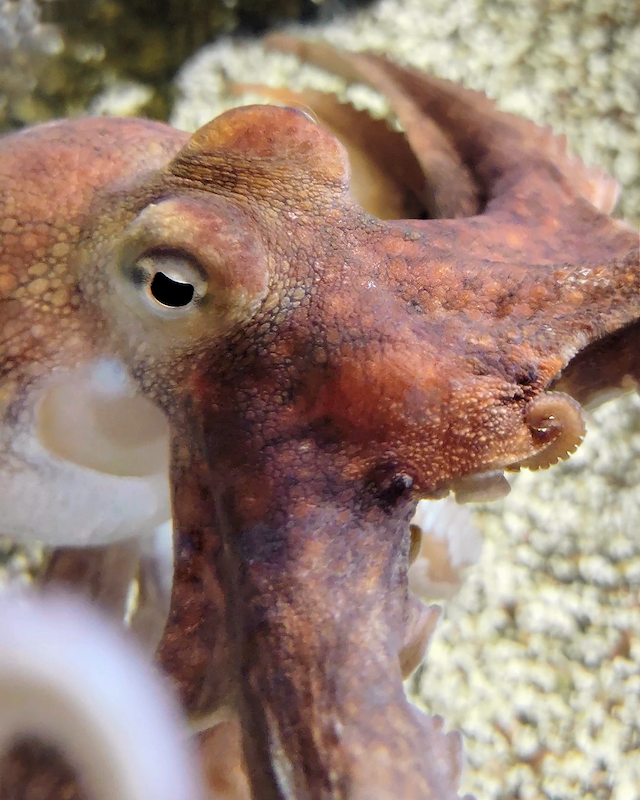
The common octopus can manipulate objects and maneuver within their environment with the help of their eight arms, but you may be surprised to learn they have no bones in their body! This helps in regrowing arms that may be damaged or removed through predator attacks. The octopus is an invertebrate, which allows them to squeeze through surprisingly small spaces. There is one part of their body that can’t be manipulated, though.
Did you know that cephalopods also have a beak?
Yes, you read that correctly! The common octopus’s diet consists of not only small fish, but other animals like crustaceans (which have tough exoskeletons) and mollusks (which reside in hard shells). To reach and break apart their prey, octopuses use a hard, parrot-like beak made of chitin — the same material that forms the exoskeletons of crustaceans like lobsters and insects like beetles! This natural material is so strong that it can be found in the stomachs of larger animals that have recently digested an octopus.
Adaptations of an Antihero
When you think of characters showcasing ink or venom during confrontations, you may picture Rorschach of “Watchmen” and Venom of “Spiderman”, but the octopus uses these natural materials in bouts with prey and predators in real life! All octopuses are venomous, releasing a paralyzing agent through their saliva when biting.
Ink, on the other hand, comes to aid in defense. When escaping danger, the common octopus releases a combination of mucus and melanin. This dark “cloud” of material not only obstructs the vision of potential predators, but it also disrupts other animals’ sense of smell!
Standing Out by Blending In
One of the most fascinating adaptations of the octopus is its ability to camouflage. Octopuses have specialized pigment cells in their skin that allow them to change color based on their environment. These cells, called chromatophores, act a bit like pixels on a screen, shifting to showcase pigments held within!
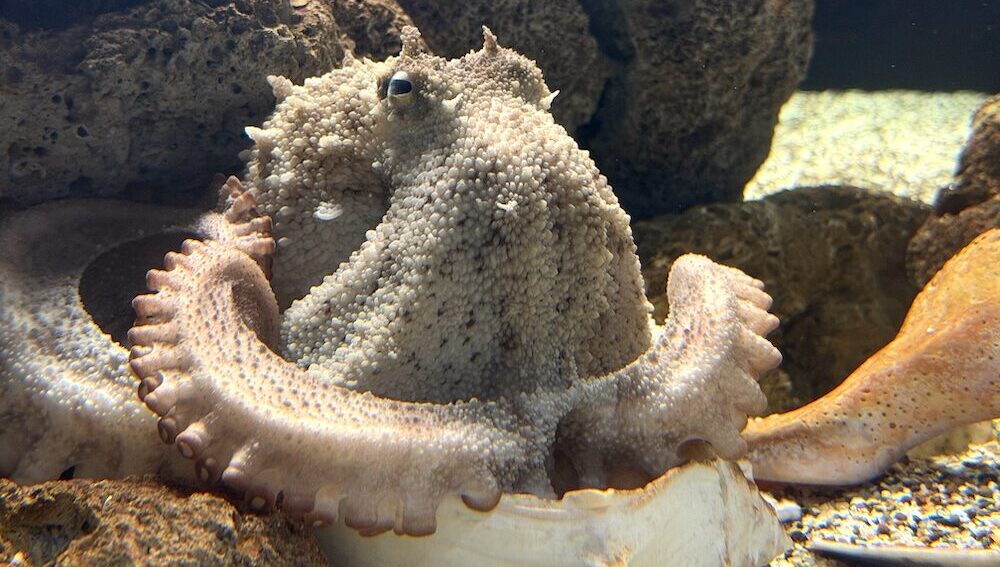
Not only can the common octopus change its color nearly instantaneously, but it can also create texture on its skin. A unique muscular structure called papillae allows this amazing creature to go from smooth and sleek to rough and bumpy in just moments!
Pro Tip: When you’re looking at a common octopus in our Camouflage exhibit, take a few minutes to pause and observe. You’ll likely see these chromatophores and papillae in action as the animal moves across various colored and textured surfaces!
To us, the octopus is *anything* but common. On your next adventure through the Aquarium, talk to an educator to learn even more about these sensational cephalopods!
Published February 27, 2026